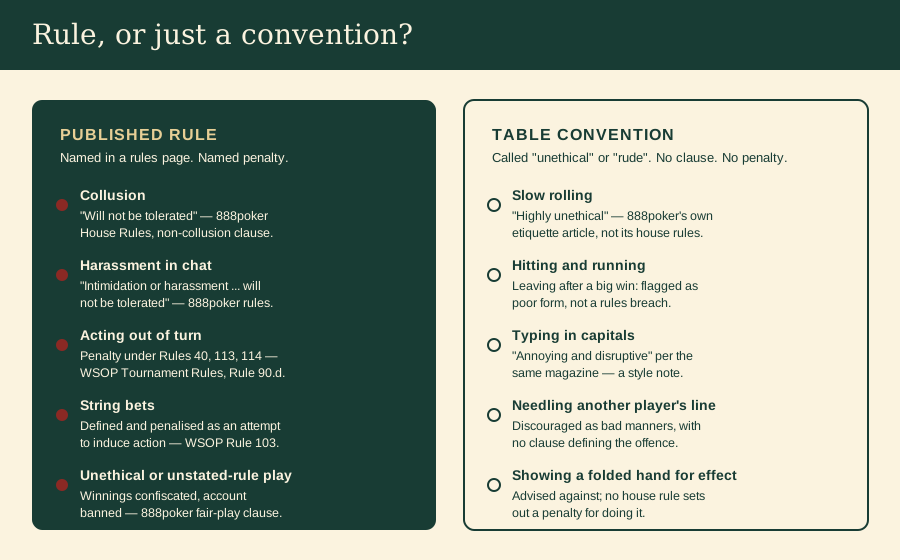
A house rules page and a "poker etiquette" article usually sit on the same operator's own site. Read side by side, they draw a clear line between what gets you banned and what just gets you disliked.
A slow roll is delaying the reveal of a winning hand at showdown after an opponent has shown. The 888poker etiquette guide calls it 'highly unethical'; the 888poker house rules and the 2026 World Series of Poker tournament rules do not name it at all. This piece reads all three, separates the slow roll from ordinary slow play, and sorts each behaviour into rule or convention.
Compare 888poker’s etiquette writing with its house rules, then separate an observed online delay from an allegation of deliberate humiliation or cheating.
Five PokerStars help pages separate leaving after a win, same-table returns, buy-in obligations and Seat Me, with their scope differences kept visible.
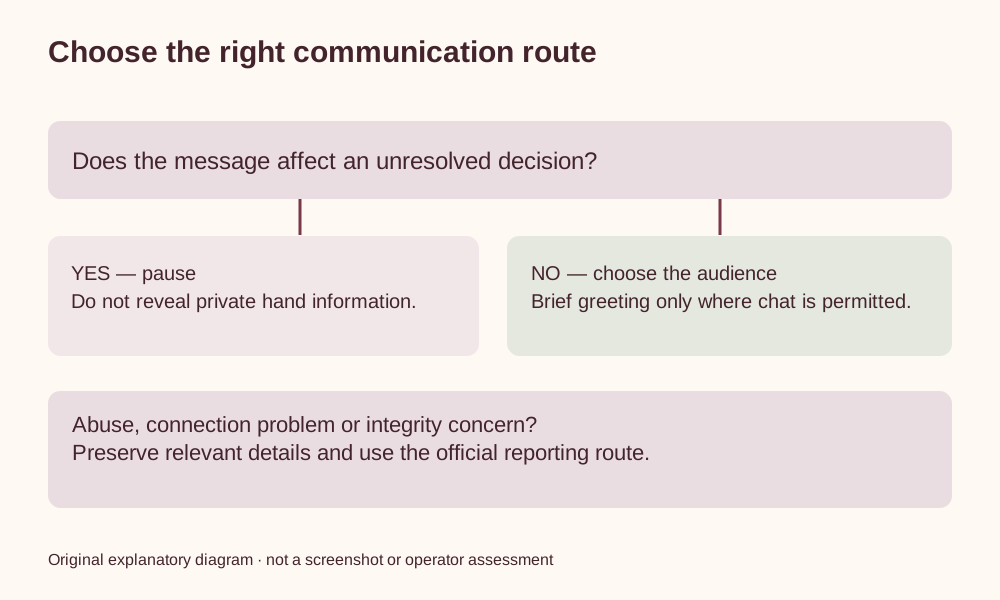
A practical guide to the social boundaries of an online table: protect live decisions, use the right support channel and leave room for the person behind the screen.
What are the essential unwritten rules for live poker play?
888poker's guide lists 30 and calls them unwritten. The ones checked here against the rule books are showing quickly at showdown, not slow rolling, and not holding up the game; the WSOP rules turn the last two into penalties.
How do poker table etiquette rules differ between live and online games?
Live, the WSOP rules give observers the clock and staff a penalty ladder; online, 888poker's house rules give the player a time bank and a general unethical-play clause that reaches the account.
Which companies offer poker table etiquette guides or tutorials?
888poker publishes the 30-rule guide read here; the WSOP publishes rules rather than an etiquette guide, and this piece recommends no guide over another.
There is no universal penalty established by these sources. 888poker criticises it in etiquette material and publishes a broader fair-play policy, so neither “always banned” nor “always permitted” is a supported general answer.
Does a slow online decision prove a deliberate slow roll?
No. A delay is observable; motive needs more evidence. The operator material acknowledges divided online attention and internet lag as relevant possibilities.